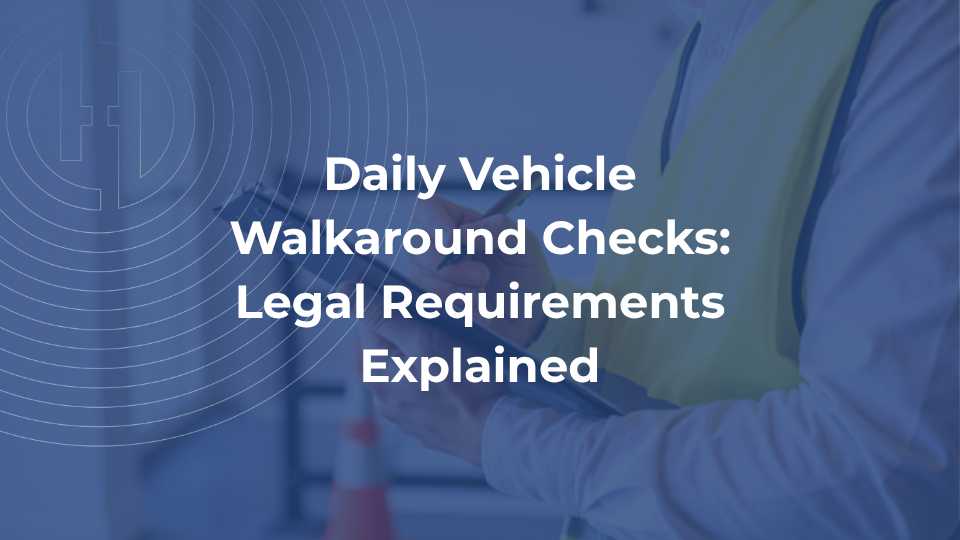
For any fleet operating commercial vehicles in the UK, the daily walkaround check is one of the most fundamental, and most frequently overlooked, compliance requirements. It is not a recommended best practice. It is a legal obligation.
This guide explains exactly what the law requires, what a thorough walkaround check involves, and what happens to drivers and operators who fail to carry them out correctly.
What Is a Vehicle Walkaround Check?
A walkaround check is a pre-use vehicle inspection carried out by the driver before the vehicle is first driven each day. The purpose is straightforward: to confirm the vehicle is in a safe, roadworthy condition before it enters a public road.
For Heavy Goods Vehicles, these checks are a legal requirement under the Road Vehicles (Construction and Use) Regulations 1986 and the Road Traffic Act 1988. The DVSA also requires operators to build daily checks into their maintenance and compliance systems as part of their operator licence undertakings.
Importantly, the check counts as working time. Drivers must be given adequate time to complete it properly. According to DVSA guidance, a thorough walkaround check should take a minimum of 15 minutes; a rushed check is treated as a red flag by enforcement officers.
Who Is Responsible?
Responsibility falls on both the driver and the operator.
The driver
The driver is legally required to inspect the vehicle before starting their journey. If a vehicle is used by multiple drivers in a day, each driver must carry out a check at the start of their shift. This cannot be delegated.
The operator
Operators must provide the systems, training and tools that enable drivers to complete checks effectively. This means:
- Supplying a clear checklist - paper or digital
- Training drivers on what to inspect and how to record and report defects
- Having a documented defect reporting process in place
- Ensuring reported defects are actioned before the vehicle is used again
- Retaining check records for audit purposes
What Must Be Checked?
The DVSA outlines the key areas that must be covered on an HGV during a daily walkaround check. A thorough inspection includes:
Tyres and wheels
Check tread depth and look for cuts, bulges or embedded objects. Inspect for obvious under-inflation. Check wheel nuts - wheel nut indicators can make this quicker and more reliable.
Lights and indicators
All external lights must be clean, functional and displaying the correct colour. Check for cracked lenses, blown bulbs and damaged wiring.
Brakes
Listen for air leaks. Visually inspect brake lines and connections for damage or wear. Test the foot brake and parking brake for effective operation where it is safe to do so.
Steering
Check for excessive play in the steering wheel and look for signs of wear, damage or leaks in the steering mechanism.
Mirrors and glass
Ensure all mirrors are clean, correctly adjusted and intact. Windscreen and windows must be clear of damage that could impair the driver's view.
Fuel, oil and fluid levels
Check engine oil, coolant, AdBlue (where fitted) and fuel. Low fluid levels can indicate underlying mechanical problems as well as operational issues.
Body and load security
Inspect the vehicle body for damage that could pose a hazard. Confirm any load is properly secured. Check curtainsiders, straps and load restraint equipment.
Cab interior
Confirm that instruments are functioning, warning lights are clear, the horn works, and windscreen washer and wipers operate correctly. Check that required safety equipment (fire extinguisher, first aid kit) is present and accessible.
Worth noting
Additional checks may be required depending on how the vehicle is being used. If a vehicle has operated off-road, is older, or has a history of recurring defects, further inspections during the working day may also be necessary.
How to Report Defects
Any defect found during a walkaround check must be reported immediately and recorded in writing. The record must include:
- The vehicle's registration number
- A description of the defect
- The driver's name
- The date and time of the check
- The name of the person the defect was reported to
A vehicle with a dangerous defect must not be used until it has been rectified. Minor defects that do not affect roadworthiness can be noted for scheduled maintenance but this assessment must be made by a competent person, not simply the driver deciding to proceed.
This is where a reliable, documented defect reporting process becomes critical. Operators need confidence that every reported defect is tracked through to resolution, with records retained for a minimum of 15 months.
What Are the Consequences of Non-Compliance?
Failing to carry out walkaround checks, or failing to record them properly, has serious consequences for both drivers and operators:
- Drivers face fixed penalty fines and penalty points on their licence
- Vehicles can be immediately prohibited from use at the roadside until defects are resolved
- Operators receive a worsened OCRS (Operator Compliance Risk Score), increasing the likelihood of targeted DVSA inspections
- Persistent failures can be referred to the Traffic Commissioner, putting the operator licence at risk
For HGVs found in a dangerous condition on the road, the consequences for drivers are severe: unlimited fines and, in serious cases, a custodial sentence. The legal exposure makes it clear that walkaround checks must be treated as a non-negotiable part of daily fleet operations.
Paper Checklists vs Digital Systems
Many operators still use paper-based defect books. While paper is legally acceptable, digital systems offer significant practical advantages:
- Time-stamped records confirm when and how each check was completed
- Real-time visibility for transport managers across multiple vehicles or sites
- Instant alerts when defects are reported
- Audit-ready records accessible immediately if the DVSA requests them at a roadside check or inspection
As DVSA enforcement increasingly focuses on the quality and traceability of compliance records, digital walkaround tools are becoming the standard for well-run fleets.
Build defect reporting into a watertight compliance system
H-TEC works with fleet operators to put practical compliance processes in place; from daily checks through to full defect management and tachograph analysis.
Find out more about our defect reporting solutions: https://h-tec.co.uk/what-we-do/defect-reporting/