Why Vision Is the Missing Piece in Fleet Safety and How to Fix It
If you operate HGVs, you already know that a driver's field of view can be the difference between a safe manoeuvre and a serious collision. What you might not know is just how much progress has been made in recent years, and how much of it comes down to a single principle: what a driver can see.
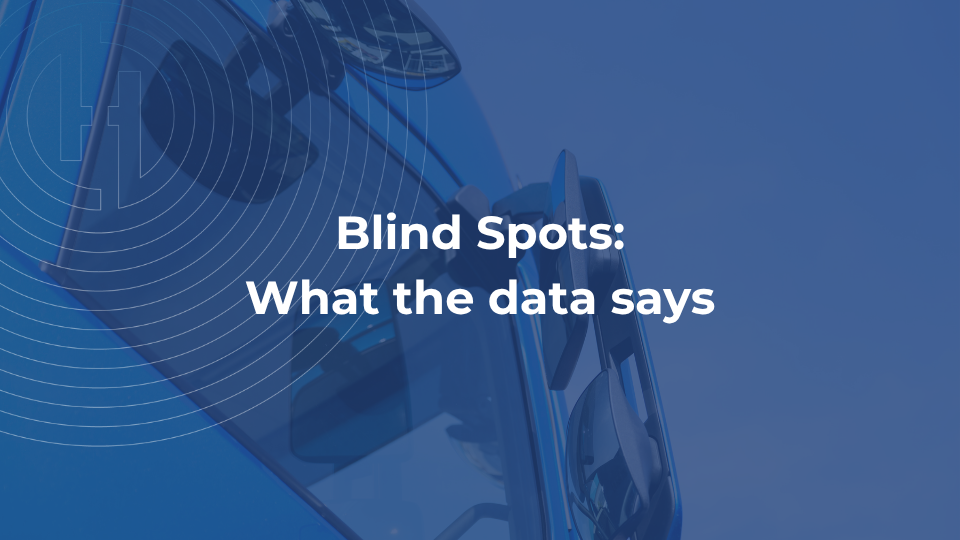
Since the Direct Vision Standard (DVS) was introduced in 2019, fatal HGV collisions where restricted vision was a contributing factor have halved compared with the 2018 baseline (Transport for London). That's proof that tackling blind spots head-on saves lives on the road.
The Direct Vision Standard: from mirrors to a "Safe System"
The DVS was built on a simple idea: rate HGVs on how much a driver can see directly through their cab windows, from zero stars (poor direct vision) to five (excellent). Vehicles that fall short aren't excluded; they're required to fit a Safe System of supporting technology instead: camera monitoring, sensors, warning devices, and other measures that give drivers indirect vision where direct sightlines fall short.
That's the crucial shift for operators to understand. Direct vision alone was never going to solve the problem for every vehicle on the road: older HGVs, specialist builds, and vehicles with a naturally high cab can't simply be redesigned. The Safe System recognises that reality and asks fleets to close the gap with technology instead. As the standard has tightened, moving toward the Progressive Safe System and a minimum three-star requirement, the message for operators has only got clearer: vision technology isn't a nice-to-have anymore, it's part of how you stay compliant and how you protect people around your vehicles.
Four blind spots, four different risks
No single camera can cover every risk an HGV faces. That's why H-TEC's camera range is built around the specific blind spots that cause the most serious incidents, not a one-size-fits-all box-tick.
360° Visibility Systems stitch together multiple camera feeds into a single bird's-eye view around the vehicle, removing the guesswork during tight manoeuvres, yard reversing, and low-speed turns where the cab's mirrors simply can't show what's directly alongside or behind the vehicle.
AI Driver Monitoring looks inward rather than outward. It's designed to catch the human factor behind so many "vision" incidents, fatigue, distraction, and lapses in attention, flagging risk in real time before it turns into a collision.
Blind Spot Cameras target the classic close-proximity danger zone: cyclists and pedestrians near the nearside of the vehicle, particularly at junctions and when turning left; exactly the scenario TfL's own data identifies as the most common cause of fatal HGV collisions involving vulnerable road users.
Onsight extends visibility to the moments a driver can't monitor constantly, giving fleet managers and drivers a clearer picture of what's happening around the vehicle beyond the cab itself, supporting both safety and incident evidence when it matters most.
Together, these four systems map onto the same principle behind the Safe System itself: don't rely on one fix for every blind spot — layer the right technology against the right risk.
Vision technology is no longer optional
The TfL figures make the case: halving fatal collisions where vision was a factor isn't a coincidence, it's the direct result of operators adopting camera and monitoring technology at scale. Whether you're working toward DVS compliance, renewing your safety permit, or simply want to reduce risk to your drivers and the public, the right camera setup is one of the most effective investments a fleet can make.
Not sure which combination is right for your vehicles? Our Camera Buyers Guide breaks down all four systems side by side, so you can match the right technology to the right blind spot.
Download the Camera Buyers Guide and take the guesswork out of choosing your fleet's next safety upgrade.